
StoryScope for Venus in Scorpio : THE THINGS WE KEEP
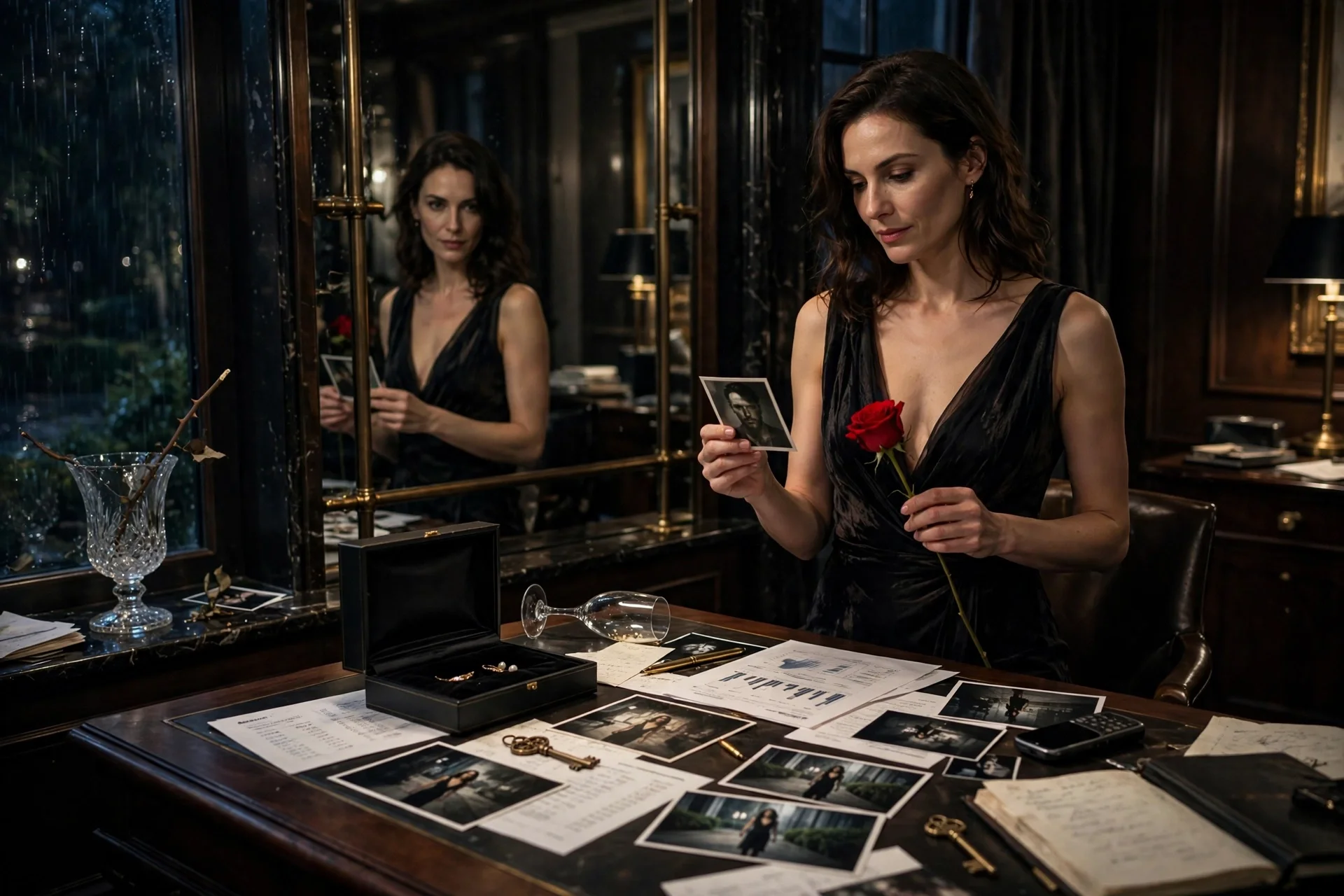
By the time my husband disappeared, I had already killed him three times.
The first time was in my head, on a Tuesday afternoon, while he was explaining compound interest to me over lunch.
The second was in the shower, where I imagined pushing him backwards through the glass doors and watching his expensive body fold itself around the shards.
The third was the most satisfying.
It involved a wood chipper.
I had no wood chipper, unfortunately.
This was one of the many reasons our marriage had failed.
Daniel believed every problem could be solved with sufficient money, planning and a competent solicitor. I believed some problems deserved a little creativity.
We had been married for eleven years.
People called us « a beautiful couple ».
People also called our house « stunning ».
People said this while standing in our kitchen, drinking champagne we had paid for, looking at the enormous marble island that had cost more than my first flat.
People loved the house.
People loved Daniel.
People found me charming.
This was the arrangement.
Daniel was charming in the way a knife can be charming if it has a beautiful handle.
He remembered birthdays. He sent flowers. He held doors open.
He also knew exactly how much money I had in my savings account.
He knew the password to my laptop.
He knew which of my friends I disliked and which ones he thought were dangerous.
He knew that when I said, « I'm fine », I was usually not.
He liked that.
He said it made me mysterious.
The truth was less flattering.
I had simply learned that honesty was expensive.
Then, three weeks before Daniel disappeared, he asked me whether I loved him.
We were in bed.
It was nearly midnight.
The room was dark except for the light from his phone.
« Of course, » I said.
He didn't look up.
« That's not what I asked. »
I stared at the ceiling.
There are questions that are really questions, and there are questions that are traps wearing little question-shaped hats.
This was a trap.
« Do you love me ? » he asked again.
« What answer are you hoping for ? »
He smiled.
« An honest one. »
That was when I knew something was wrong.
Daniel had never wanted honesty.
He wanted confirmation.
Honesty was something you demanded from people when you already knew the answer.
I rolled towards him.
« Yes, » I said.
« Completely ? »
« Nobody loves anybody completely. »
He finally looked at me.
« That's a very strange thing to say. »
« It's a very strange question. »
He laughed.
But he didn't laugh because it was funny.
He laughed because he'd just found something.
Something he could use.
The next morning, he transferred £80,000 from our joint account.
When I asked why, he said, « Business. »
When I asked which business, he said, « Mine. »
That afternoon, I discovered a second phone hidden inside his study desk.
It contained exactly six contacts.
One was a woman named Elise.
One was a solicitor.
One was a private investigator.
The remaining three numbers belonged to people I had never heard of.
I did not call Elise.
I searched for her.
She was thirty-eight.
Beautiful.
Divorced.
No children.
She owned a gallery in Chelsea and appeared in photographs beside Daniel at three charity events.
In one photograph, his hand was resting on the small of her back.
I stared at it for a long time.
Then I laughed.
Not because it was funny.
Because I had spent eleven years being afraid of infidelity and had somehow forgotten that betrayal could be much more interesting than sex.
That evening Daniel came home carrying flowers.
Red roses.
Forty-eight of them.
« For you, » he said.
« Why ? »
« Because I love you. »
I looked at the flowers.
« That's unfortunate. »
He smiled.
« What is ? »
« Nothing. »
I put the roses in a vase.
Then I removed the thorns.
All of them.
I don't know why.
Perhaps I was being considerate.
Perhaps I was making a point.
Perhaps I simply enjoyed the sound of them snapping.
Daniel watched me.
« You're acting strange. »
« I'm married. »
He laughed.
I smiled.
We were still playing.
Two weeks later, Daniel disappeared.
The police arrived at 9.17 on a Thursday morning.
I was making coffee.
The detective was a woman named Sergeant Vale. She had the expression of someone who had spent twenty years being lied to by people who believed they were clever.
« When did you last see your husband ? »
« Last night. »
« What time ? »
« Around eleven. »
« Did you argue ? »
« We were married. »
She looked at me.
I looked back.
« So that's a yes ? »
« That's a marriage. »
She wrote something down.
« Did he seem upset ? »
« Daniel never seemed upset. »
« Why not ? »
I poured coffee into two cups.
« He preferred other people to be upset for him. »
She didn't drink the coffee.
Good instinct.
The police searched the house.
They found nothing.
No blood.
No weapon.
No body.
Daniel's car was still in the garage.
His passport was upstairs.
His watch was on the bedside table.
His wallet was beside the sink.
His shoes were in the hall.
His phone was gone.
His second phone was gone.
I had expected them to find something.
That was the embarrassing part.
I had spent three weeks preparing for this moment.
I had imagined every possibility.
I had moved things.
Deleted things.
Rearranged things.
I had even watched three videos about cleaning blood from grout.
The videos were surprisingly cheerful.
The woman demonstrating the technique had excellent eyebrows.
But Daniel had vanished without giving me the courtesy of dying in my house.
It felt rude.
On the fourth day, Sergeant Vale returned.
She stood in my kitchen.
« We've had a development. »
« Is he dead ? »
She paused.
« Why did you ask that first ? »
I smiled.
« Because if he's alive, this is going to be much more complicated. »
That was when she stopped pretending she believed me.
She placed a photograph on the table.
It showed Daniel entering a hotel.
With Elise.
I looked at it.
« Well, » I said. « At least he had good taste. »
« You don't seem surprised. »
« I am. »
« About what ? »
I touched the photograph.
« I thought her hair was darker. »
Sergeant Vale stared at me.
I stared at the photograph.
Then I noticed something.
A small detail.
Daniel was wearing the watch he'd left beside our bed.
I looked at Vale.
« When was this taken ? »
« Three nights ago. »
I laughed.
It came out badly.
Thin and frightened.
For the first time since Daniel disappeared, I felt something I hadn't expected.
Fear.
Not because Daniel was alive.
Because he was.
That night I went into his study.
I opened the safe.
Inside were documents.
Bank statements.
Property deeds.
Photographs.
And a folder with my name on it.
I opened it.
The first page was a photograph of me asleep.
The second showed me leaving work.
The third showed me having dinner with my sister.
The fourth showed me buying groceries.
There were photographs from eleven years ago.
There were photographs from last month.
There were photographs taken inside our house.
I turned the pages.
Then I found the last photograph.
It showed me standing in the kitchen.
Holding a red rose.
The date was yesterday.
I hadn't bought any roses yesterday.
I turned the page.
There was a handwritten note.
Three words.
« She knows now. »
I heard a noise behind me.
A floorboard creaked.
I froze.
Then came another sound.
A man's voice.
Soft.
Amused.
« You always were curious. »
I turned around.
Daniel stood in the doorway.
Alive.
Smiling.
Holding a bottle of champagne.
For one beautiful second, I felt relief.
Then I remembered the photographs.
The money.
The second phone.
Elise.
The flowers.
The question in bed.
« How long ? » I asked.
« How long what ? »
« How long have you been planning this ? »
He stepped into the room.
« Planning what ? »
I laughed.
« You really are going to make me say it. »
He put the champagne on the desk.
« I wanted to see whether you'd tell the truth. »
« About what ? »
« Everything. »
I looked at him.
And suddenly the entire marriage rearranged itself.
Every locked drawer.
Every unexplained expense.
Every late night.
Every question.
Every gift.
Every apology.
Every time Daniel had said, « Trust me. »
He had not been trying to build trust.
He had been measuring how much I would tolerate before I stopped trusting him.
« Elise ? » I asked.
« A business partner. »
« The money ? »
« Insurance. »
« The photographs ? »
He smiled.
« Security. »
I nodded.
Then I asked the only question that mattered.
« Are you going to kill me ? »
He laughed.
Actually laughed.
« God, no. »
I waited.
« I need you. »
That was worse.
Much worse.
Because there are few things more frightening than being loved by someone who regards you as an asset.
I stood.
« And if I leave ? »
« You won't. »
« Why ? »
He looked almost tender.
« Because I've made sure you can't. »
I felt something inside me settle.
Not break.
Settle.
Like a stone finally reaching the bottom of deep water.
« Daniel ? »
« Yes ? »
« Do you remember asking me whether I loved you ? »
His smile returned.
« Of course. »
« I lied. »
For the first time that evening, he looked uncertain.
It lasted less than a second.
But I saw it.
And that was enough.
I stepped towards him.
« I haven't loved you for years. »
He stared at me.
« Then why stay ? »
I smiled.
« Because I was waiting to find out what you were hiding. »
His face changed.
I walked past him.
« And now I know. »
He turned.
« What are you talking about ? »
I opened the study door.
Sergeant Vale stood outside.
Behind her were two detectives.
Daniel looked at me.
Then at them.
Then back at me.
« You called the police ? »
« No. »
His face went pale.
« Then who ? »
I smiled.
« Elise. »
Silence.
It was beautiful.
For once, nobody knew what to say.
I had always thought honesty would feel liberating.
It didn't.
It felt like standing at the edge of a very high building and discovering that you had wings only because there was no longer anything left to lose.
Daniel looked at me.
« You can't trust her. »
« I don't. »
« Then why ? »
I glanced at the police.
Then at him.
« Because I trust her less than I trust you. »
Sergeant Vale almost smiled.
Almost.
Daniel was arrested that night.
The investigation lasted eight months.
There were shell companies.
Fraud.
Blackmail.
Forgery.
Two other women.
One other wife.
Apparently I had not even been his first wife.
I was offended by that.
Not morally.
Aesthetically.
I felt I deserved originality.
When the divorce finally came through, I sold the house.
I sold the furniture.
I sold the jewellery.
I kept the vase.
The one that had held the forty-eight roses.
It sat on my new kitchen windowsill, empty.
My sister asked why I kept it.
I told her the truth.
« I like remembering what I survived. »
She nodded.
Then she asked the question people always ask when they want to believe the story has ended.
« Are you happy now ? »
I looked through the window.
The garden was small.
The house was cheap.
Nobody knew where I was.
Nobody had my passwords.
Nobody photographed me while I slept.
Nobody knew exactly how much money I had.
Nobody knew what I was thinking.
It was terrifying.
It was wonderful.
« I'm honest now, » I said.
My sister smiled.
« That's not the same thing. »
« I know. »
I poured two glasses of wine.
Then I looked at the empty vase.
For eleven years I had mistaken possession for devotion.
Control for security.
Silence for peace.
And secrets for intimacy.
Now I understood something much simpler.
You cannot build a relationship on the things you refuse to say.
Eventually the truth gets bored.
Eventually it comes looking for you.
Sometimes it knocks politely.
Sometimes it walks through the front door carrying champagne.