
StoryScope of the Day : WHEN THE LETTERS RETURNED
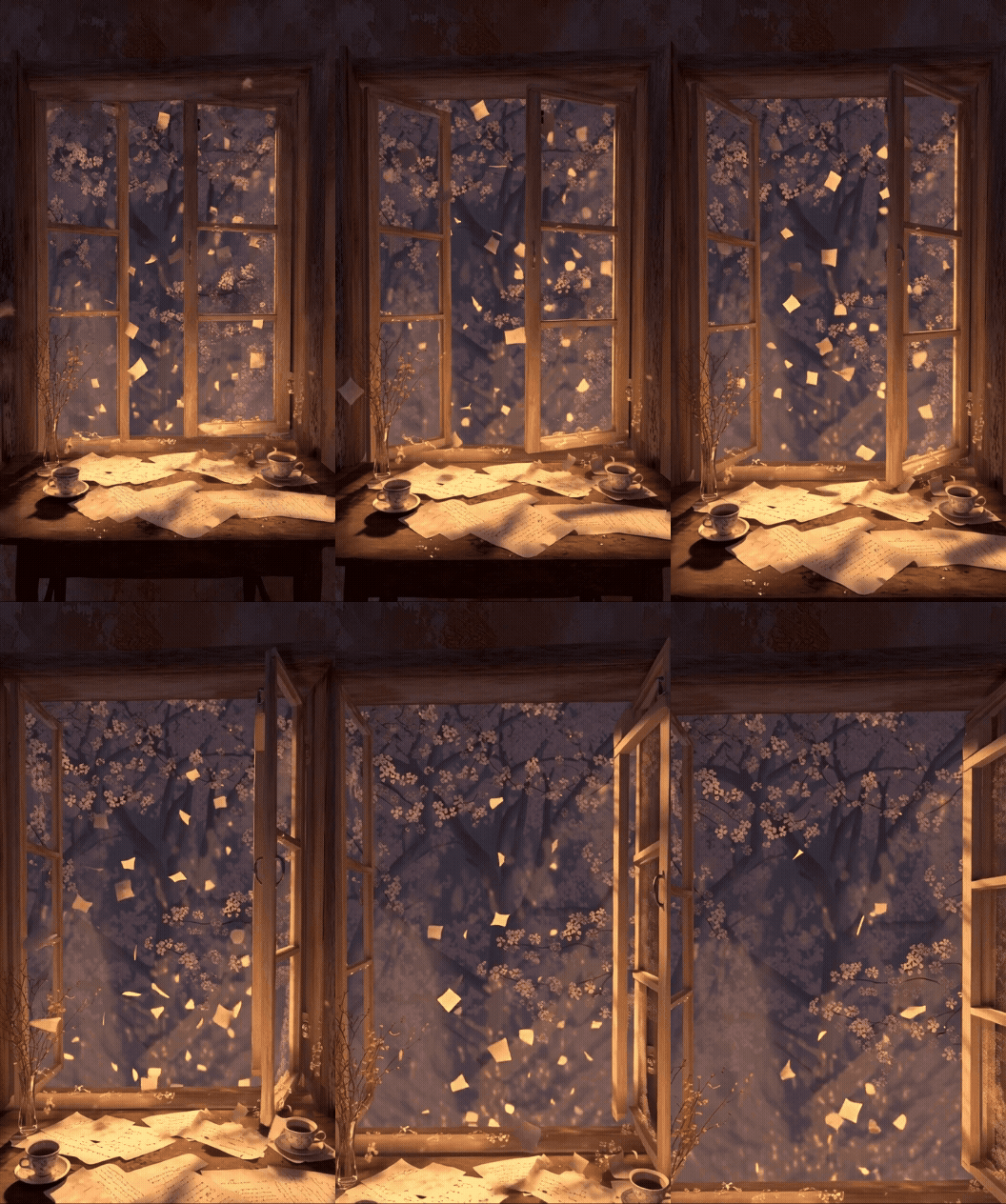
The post began returning letters that had never been sent.
They arrived without stamps, without postmarks, their envelopes a soft cream that seemed to remember the warmth of hands. They slid through the letterboxes of the town like shy confessions. Inside each was a conversation paused mid-sentence — words once drafted, never delivered.
Eleanor found hers folded inside a cookbook she had not opened in years. The paper smelt faintly of rosemary and rain. She recognised the handwriting at once. Her own, from a decade ago.
« I didn’t say what I meant, » it began.
The sentence stopped there.
The town did not panic. This was not that sort of place. The baker found an apology to his sister tucked into a sack of flour. The headteacher discovered a love note she had once written to a woman she had not dared to keep. A violinist uncovered sheet music annotated with dreams he had abandoned when the mortgage seemed louder than melody.
They did not gather in the square or light bonfires. Instead, they made tea.
Eleanor boiled water slowly, as though time required coaxing. She sat at her small wooden table and read the half-letter again. Outside, the plum tree she had planted with Thomas — before the quiet years — trembled in a wind that felt more like memory than weather.
That evening, Thomas knocked at her door.
He looked neither older nor younger than she remembered, merely rearranged by life. In his hands he held a letter, also unfinished.
« I suppose you received something, » he said.
She stepped aside and let him in.
They sat opposite each other at the table where once they had argued about paint colours and whether silence was peace. The room glowed amber. No accusations hovered. No dramatic music swelled. Only the ticking of the clock, which had begun, inexplicably, to tick more slowly since the letters arrived.
Thomas unfolded his page.
« I thought not speaking would protect us, » he read quietly. « I mistook stillness for harmony. »
Eleanor felt something loosen, not like a knot snapping but like a hand unclenching.
« I thought asking for more would make me ungrateful, » she replied, reading from her own page. « So I asked for nothing. »
They did not rush to fill the space after those sentences. The silence felt different now — not a wall, but a field.
Outside, neighbours’ windows glowed. Across the road, Mrs Patel and her estranged son sat side by side, comparing memories that no longer accused. In the flat above the bakery, the headteacher laughed softly with the woman she had once written to, discovering that courage did not expire.
Old feelings did return, but they had altered their posture. They no longer demanded; they inquired. They did not shout; they asked, « What did you need then ? What do you need now ? »
Thomas traced the rim of his mug. « I kept thinking we needed an ending, » he said.
« Perhaps we only needed understanding, » Eleanor answered.
The clock ticked. Slower still.
They spoke for hours, though it felt like stepping stones rather than a bridge. They revisited familiar ground, but each time the soil felt turned, aerated. Where once they had defended, they now described. Where once they had insisted, they now listened.
At one point Thomas smiled faintly. « Do you remember the mural you never painted ? »
Eleanor laughed, surprised. « I remember deciding I was too sensible. »
« I kept the sketches, » he said.
She blinked. The part of her that once would have flared with accusation remained calm. « Why ? »
« Because I knew you would return to them one day. Even if it wasn’t with me. »
Something tender shifted between them. Not reconciliation, not yet. Something more spacious.
The next morning, the town’s shopkeepers noticed a curious pattern. No one bought anything extravagant. The hairdresser reported a sudden reluctance among clients to cut their hair into bold shapes. « I’ll keep it as it is, » they said, touching their familiar reflections with gentler hands.
It was not fear that restrained them, but patience.
Eleanor did not decide anything that week. She did not repaint the kitchen or move furniture or declare a new beginning. Instead, she found the old sketches in a drawer where Thomas had left them years ago, edges curled like petals.
She pinned one to the wall.
In it, a plum tree bloomed across a brick surface, its branches carrying small fragments of handwritten words instead of fruit.
She stood before it and realised the letters had not returned to create closure. They had returned to widen the story.
Thomas visited again, and sometimes he did not. They spoke in instalments. They allowed questions to breathe. When silence came, it no longer pretended to be peace. It was simply pause.
One afternoon, walking through town, Eleanor passed a young woman arguing fiercely with her reflection in a shop window.
« Say it properly, » the reflection insisted.
The young woman took a breath and tried again, softer this time.
Eleanor recognised herself — not in the woman, but in the attempt. She felt gratitude for the version of herself who had once believed quietness was kindness. That woman had done her best.
When the letters finally stopped arriving, the town felt no loss. Conversations continued, slower and truer. The clock resumed its ordinary rhythm.
Eleanor and Thomas stood beneath the plum tree as its blossoms began to fall.
« What are we now ? » he asked gently.
She considered the question without urgency.
« We are speaking, » she said. « And that feels enough. »
The blossoms settled at their feet, pale and forgiving. The air held no grand declarations. Only the steady, miraculous act of listening.